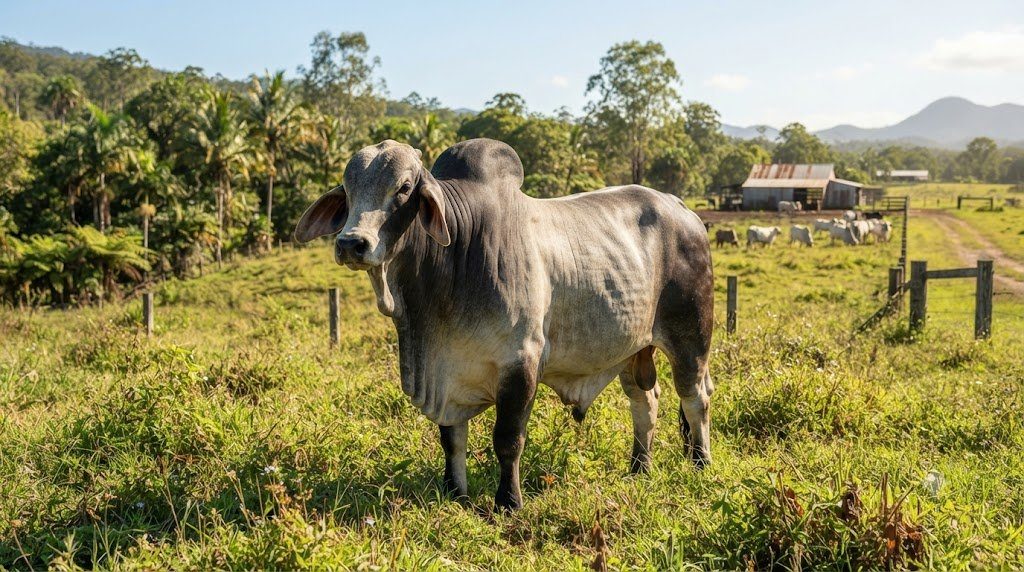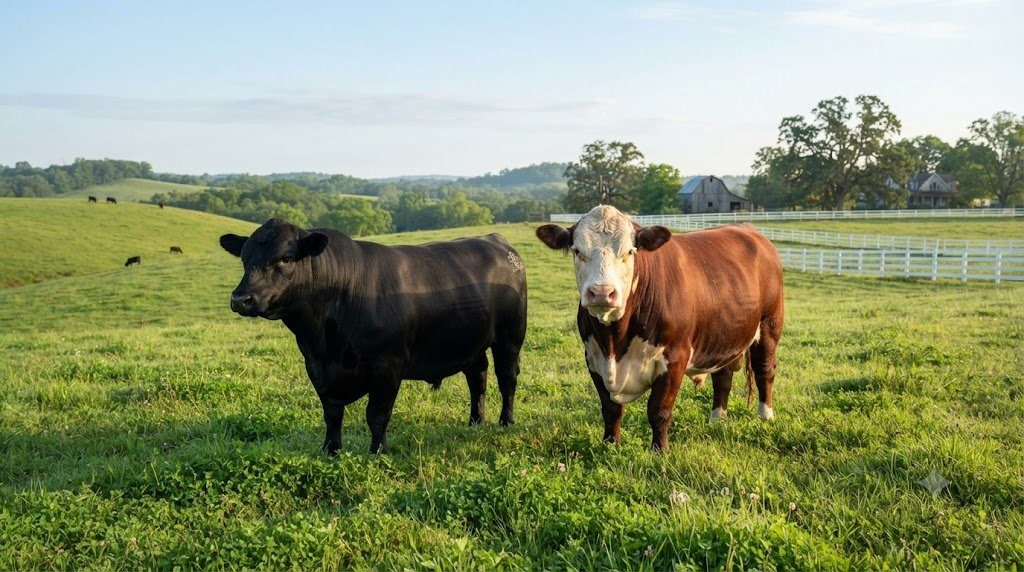
British beef cattle breeds—specifically Aberdeen Angus (Black and Red Angus), Hereford (Polled and Horned), and Beef Shorthorn—form the foundational maternal and carcass-quality backbone of the global commercial beef industry. Originating across the lush, cool-temperate pastures of Scotland and England, these Bos taurus bloodlines have been refined over three centuries of pedigree selection to excel in forage conversion efficiency, early physiological maturity, calving ease, maternal milk persistence, and superior intramuscular fat deposition (marbling). In modern commercial ranching, understanding the distinct genomic architecture, Expected Progeny Differences (EPDs), and F1 crossbreeding synergies of British breeds is essential for maximizing grid-based carcass premiums and cow-calf herd profitability.
The British Maternal Heterosis Advantage
When commercial cow-calf producers cross Aberdeen Angus cows with Hereford sires—producing the iconic ‘Black Baldy’ F1 female—maternal heterosis (hybrid vigor) boosts lifetime cow longevity by 18%, increases weaning weight per cow exposed by 12% to 15%, and improves first-service conception rates under sparse rangeland nutrition.
1. Historical Origins, Pedigree Evolution, and Breed Registry Standards
Each of the three premier British beef breeds emerged from distinct agroecological zones in the British Isles, shaping their structural conformation and metabolic adaptability:
- Aberdeen Angus (Bos taurus): Developed in the rugged counties of Aberdeenshire and Angus in northeastern Scotland by pioneering breeders Hugh Watson of Keillor and William McCombie of Tillyfour during the early 19th century. Naturally polled (hornless) with solid black or recessive red coat pigmentation, Angus cattle revolutionized commercial beef packers through unmatched intramuscular marbling and carcass yield.
- Hereford (Horned & Polled): Originating in Herefordshire in the West Midlands of England during the 1700s under Benjamin Tomkins, the Hereford was bred as a hardy, thrifty grazing animal capable of converting coarse grass into heavy carcass weight. Distinguished by its deep cherry-red body, white face, crest, and underline, the Polled Hereford mutation was later isolated in Iowa in 1901 by Warren Gammon.
- Beef Shorthorn: Evolved in the Teeswater valley of northeastern England (Durham and Yorkshire) during the late 18th century through the intensive line-breeding work of Charles and Robert Colling. Known for their distinctive red, white, or roan coat patterns, Shorthorns contributed foundational genetics to over 40 modern global cattle breeds, prized for docile temperament, pelvic dimensions, and extreme maternal milk flow.
Genomic Divergence and Coat Color Inheritance Genetics
Coat color and horn status across British breeds are governed by well-documented Mendelian loci that hold substantial economic value in commercial feeder calf auctions. The dominant extension allele ($E^D$) at the Melanocortin 1 Receptor (MC1R) gene produces solid black pigmentation in Black Angus, whereas homozygosity for the recessive allele ($e/e$) yields Red Angus. In Herefords, the dominant piebald spotting allele ($S^{H}$) on chromosome 6 governs the iconic white-face phenotype, which acts as a dominant visual genetic marker when crossed onto solid-colored cows. In Shorthorns, the roan phenotype (intermingled red and white hairs) is controlled by codominance at the KIT ligand (KITLG) locus ($R/r$), where homozygous $R/R$ individuals are solid red, $r/r$ individuals are white, and heterozygous $R/r$ cattle display classic blue or red roan coats.
2. Comparative Phenotypic Conformation and Production Metrics
While all three British breeds are classified as moderate-framed, early-maturing maternal and carcass types, significant physiological differences dictate their deployment across varied ranching environments:
Herefords exhibit lower maintenance energy requirements per metabolic body weight ($BW^{0.75}$) during harsh winter grazing compared to high-milk Angus bloodlines, storing greater subcutaneous fat reserves over the ribs while reducing visceral organ mass during winter dormancy. Conversely, Angus cows mobilize body fat more aggressively to sustain heavy lactation curves, producing heavier 205-day weaning weights when forage crude protein exceeds 11%.
3. Expected Progeny Differences (EPDs) and Genomic Selection
Modern pedigree selection within the American Angus Association (AAA), American Hereford Association (AHA), and American Shorthorn Association (ASA) utilizes Single-Step Genomic BLUP (ssGBLUP), combining multi-generational pedigree performance records with 50K or 100K SNP genomic panels:
The Maternal Milk Over-Selection Trap
In semi-arid Western ranching systems (receiving less than 16 inches of annual precipitation), selecting British bulls in the top 1% for Maternal Milk EPD (> 38 lbs) creates daughters whose energy demand exceeds native shortgrass forage capacity. These excessive-milking cows fail to rebreed during the 60-day breeding window, inflating open-cow culling rates.
4. Intramuscular Adipogenesis and Carcass Marbling Biochemistry
The preeminence of British cattle in premium boxed-beef programs—such as Certified Angus Beef (CAB), Hereford Certified Beef, and USDA Prime—is rooted in their unique cellular adipogenesis physiology. Intramuscular fat (marbling) develops within the perimysial connective tissue surrounding muscle fiber bundles in the longissimus dorsi (ribeye) muscle.
Unlike Continental breeds that prioritize myostatin-driven myofibrillar protein hypertrophy until 16 to 18 months of age, British cattle activate pre-adipocyte differentiation factors—specifically Peroxisome Proliferator-Activated Receptor Gamma (PPAR-$\gamma$) and CCAAT/Enhancer-Binding Protein Alpha (C/EBP-$lpha$)—as early as the fetal mid-gestation window and the pre-weaning nursing phase. Furthermore, British breeds exhibit elevated enzymatic activity of Stearoyl-CoA Desaturase (SCD1), which converts saturated stearic acid (C18:0) into monounsaturated oleic acid (C18:1). This gives British beef fat a lower melting point (98°F to 102°F), producing a buttery, palatable mouthfeel at human body temperature.
5. Nutritional Energetics, Rumen Fermentation, and Finishing Rations
Because British breeds reach physiological maturity earlier than large-framed Continental cattle, their nutritional management across backgrounding and feedlot finishing phases requires precise Net Energy for Maintenance ($NE_m$) and Net Energy for Gain ($NE_g$) calibration to avoid excessive subcutaneous backfat (USDA Yield Grade 4 penalties):
- Cow-Calf Gestation & Lactation Rations: Mature 1,300-lb British brood cows require 1.8% to 2.1% of body weight in dry matter intake (DMI) during mid-gestation (7.5% crude protein, 52% TDN), rising to 2.5% to 2.7% DMI during peak lactation (11% crude protein, 62% TDN).
- Stocker / Backgrounding Phase (500 to 800 lbs): Growing British calves should be backgrounded on high-forage rations (alfalfa-grass haylage, corn silage, or winter wheat pasture) targeting 2.2 to 2.6 lbs/day Average Daily Gain (ADG). Excessive starch during early backgrounding triggers premature subcutaneous fat deposition and stunts skeletal frame growth.
- Feedlot Finishing Phase (850 to 1,350 lbs): High-concentrate steam-flaked corn or dry-rolled corn diets supplying 62 to 66 Mcal/cwt $NE_g$ and 13.0% to 13.5% crude protein drive rapid propionate production in the rumen. Propionate serves as the direct gluconeogenic precursor required for intramuscular marbling synthesis over a 120- to 150-day finishing period.
6. Veterinary Health, Genetic Recessives, and Ocular Pathology
Proactive herd health management in British cattle requires screening for breed-specific simple recessive genetic defects via DNA testing alongside environmental disease prevention:
- Lethal & Sub-Lethal Genetic Recessives: Pedigree Angus breeders must DNA screen breeding bulls to ensure freedom from Arthrogryposis Multiplex (AM – ‘Curly Calf’), Neuropathic Hydrocephalus (NH), Contractural Arachnodactyly (CA – ‘Fawn Calf’), and Developmental Duplication (DD). In Herefords, DNA testing eliminates Idiopathic Epilepsy (IE), Hypotrichosis (HY), and Maple Syrup Urine Disease (MSUD). In Shorthorns, screening eliminates Tibial Hemimelia (TH) and Pulmonary Hypoplasia with Anasarca (PHA).
- Bovine Ocular Squamous Cell Carcinoma (Cancer Eye) & Pinkeye: Traditional white-faced Herefords lacking circumocular melanin pigment around the eyelids are predisposed to ultraviolet solar keratitis, Infectious Bovine Keratoconjunctivitis (pinkeye caused by Moraxella bovis), and ocular squamous cell carcinoma. Modern Hereford breeding programs aggressively select for 100% red circumocular eyelid and corneoscleral pigmentation, slashing ocular pathology by over 85%.
- High-Altitude Pulmonary Hypertension (Brisket Disease): British cattle grazing mountain pastures above 7,000 feet elevation are susceptible to hypoxic pulmonary arterial vasoconstriction and right-ventricular heart failure. Ranchers operating in high-altitude basins must select bulls with Pulmonary Arterial Pressure (PAP) scores below 41 mmHg.
7. Crossbreeding Systems: The F1 Black Baldy and Rotational Hybrids
Systematic crossbreeding between British breeds unlocks non-additive genetic variance (heterosis) across lowly heritable maternal fitness and reproductive traits ($h^2 < 0.15$):
The Two-Breed Crisscross (Angus x Hereford) remains the gold standard for North American rangeland cow-calf operations. F1 Black Baldy females reach puberty 14 to 21 days earlier than purebred contemporaries, exhibit a 6% to 8% higher conception rate during drought years, and remain productive in the herd until 11 to 13 years of age. Furthermore, introducing a third British breed—such as Beef Shorthorn in a Three-Breed Rotational Cross—maintains 86% of maximum theoretical maternal heterosis across overlapping generations while preserving uniform moderate mature cow size and 100% Prime/Choice carcass marketability.
8. Enterprise Economics, Carcass Grids, and Herd Budgeting
Evaluating the financial return of British cattle genetics requires analyzing both cow-calf production costs and value-based packer grid premiums:
Because a 1,250-pound British cow consumes 18% less annual forage dry matter than a 1,550-pound large-framed Continental cow, a ranch with a fixed 1,000-ton annual forage base can stock 18% more British brood cows per section of land. At the feedlot level, steers qualifying for the Certified Angus Beef (CAB) or USDA Prime grids earn carcass premiums of $8 to $28 per hundredweight (cwt) over commodity USDA Select beef, generating an additional $75 to $250 in net revenue per finished head.
9. Frequently Asked Questions (Technical British Cattle Genetics FAQ)
Q: What is the genetic difference between Black Angus and Red Angus cattle?
Black Angus and Red Angus share identical ancestral Scottish heritage and carcass conformation, differing primarily at the Melanocortin 1 Receptor (MC1R) gene on chromosome 18. Black Angus carry the dominant black allele (ED), whereas Red Angus are homozygous for the recessive red allele (e/e). Red Angus absorb less solar radiation in hot climates, maintaining lower core body temperatures on unshaded summer pastures.
Q: Why is the F1 Black Baldy (Angus x Hereford cross) considered the premier commercial brood cow?
The F1 Black Baldy combines the superior marbling, maternal milk flow, and pigmented udder/eye traits of the Angus with the forage thriftiness, docility, longevity, and cold/heat hardiness of the Hereford. Full F1 hybrid vigor increases lifetime calf weaning weight output by up to 20% over purebred averages.
Q: What carcass specifications are required for a steer to qualify for Certified Angus Beef (CAB)?
Beyond displaying a predominantly solid black hair coat (or verified Angus genomic parentage), the carcass must meet 10 strict scientific criteria: Modest or higher marbling (Mid-Choice to Prime), medium-to-fine marbling texture, ‘A’ maturity (under 30 months old), 10 to 16 square-inch ribeye area, hot carcass weight under 1,050 lbs, less than 1 inch external fat thickness, and zero dark cutters or capillary rupture.
Q: How do Hereford breeders eliminate susceptibility to pinkeye and ocular squamous cell carcinoma?
Ocular pathology in white-faced cattle correlates directly with unpigmented skin around the eyelids and sclera. Modern Hereford breeders select heavily for red circumocular eye pigment and hooded eye conformation, which have moderate-to-high heritability (h2 = 0.35 to 0.45) and protect corneal tissues from ultraviolet damage.
Q: How is the roan coat pattern inherited in Beef Shorthorn cattle?
Shorthorn roan coloration follows incomplete dominance (codominance) at the KITLG gene locus. Crossing a homozygous solid red Shorthorn (R/R) with a homozygous white Shorthorn (r/r) produces 100% heterozygous roan offspring (R/r). Mating two roan Shorthorns yields a classic 1:2:1 Mendelian ratio of 25% red, 50% roan, and 25% white calves.
Q: Why must British feeder cattle be harvested earlier in the feedlot than Continental breeds?
British cattle reach physiological compositional maturity at lighter weights (1,250 to 1,400 lbs). Extending time on high-starch feed beyond their optimal 0.50-inch backfat endpoint causes rapid accumulation of subcutaneous waste fat, triggering severe USDA Yield Grade 4 and 5 price discounts.
Q: What is a PAP score, and why is it critical when purchasing Angus bulls for mountain ranches?
Pulmonary Arterial Pressure (PAP) measures blood pressure within the main pulmonary artery via catheterization at high elevation (> 6,500 ft). Cattle with high PAP scores (> 49 mmHg) suffer hypoxic pulmonary vasoconstriction, leading to fatal right-sided congestive heart failure (‘Brisket Disease’). Bulls scoring 35 to 41 mmHg pass high-altitude tolerance to their progeny.
Q: How does single-step genomic BLUP (ssGBLUP) improve the accuracy of EPDs in young yearling bulls?
Traditional pedigree EPDs rely solely on parental averages until a bull produces dozens of calves. Adding a 50K SNP genomic test tracks the exact chromosomal segments a young bull inherited from its ancestors, boosting EPD accuracy on day one to the equivalent of already having 15 to 25 measured progeny on the ground.